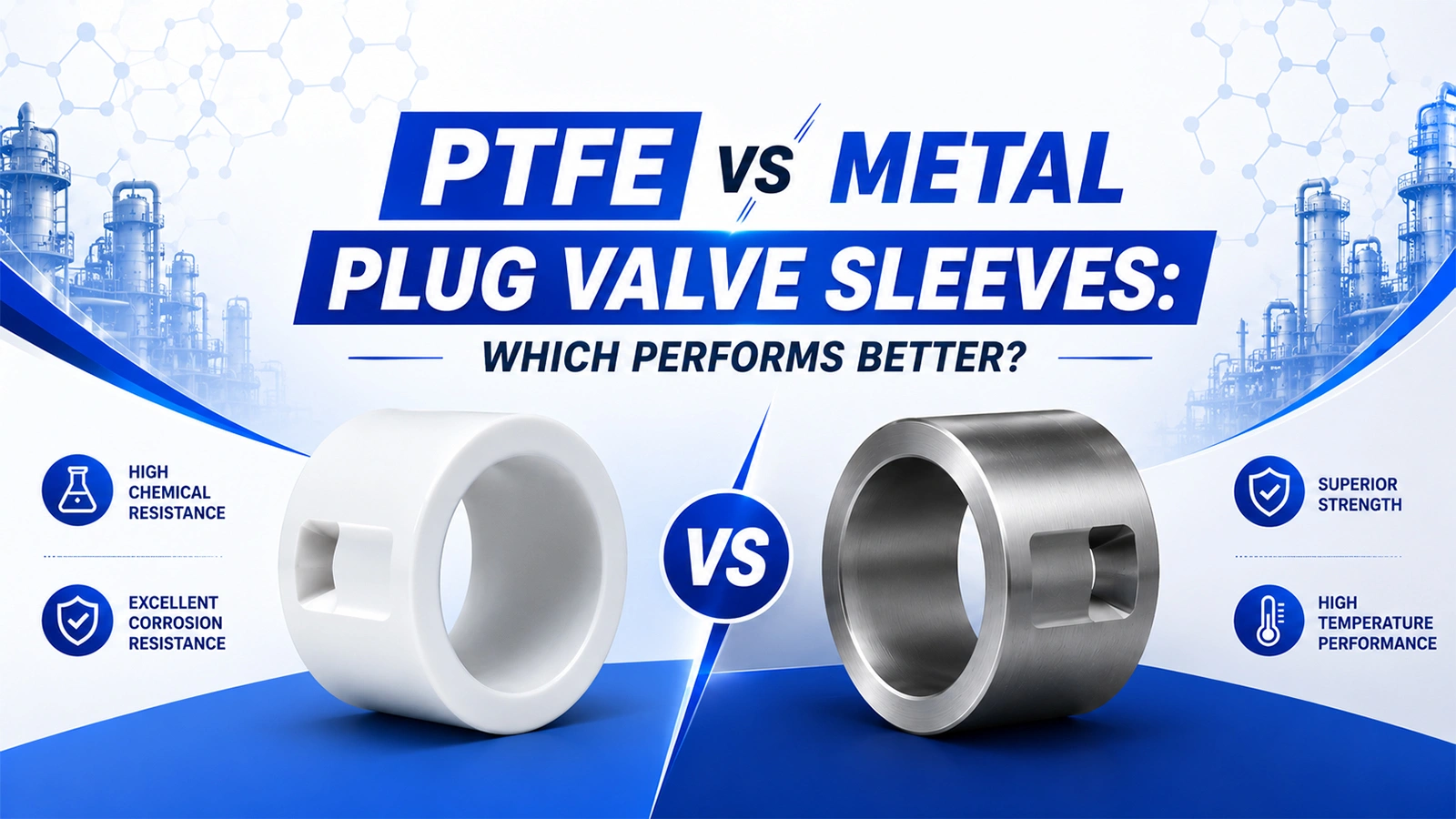
In a business where a single valve failure can lead to days of downtime, loss of product, or even endanger lives, the choice of plug valve sleeve becomes a significant engineering decision, not just a materials decision.
In this practical guide, you will get a straightforward comparison of the PTFE plug valve sleeves vs metallic sleeves based on their actual performance in high-pressure, high-temperature, and slightly aggressive chemical environments. PTFE sleeves are globally accepted for their good chemical resistance and low coefficient of friction, which ensures smooth machinery operation and consistent sealing performance.
What is a PTFE Plug Valve Sleeve?
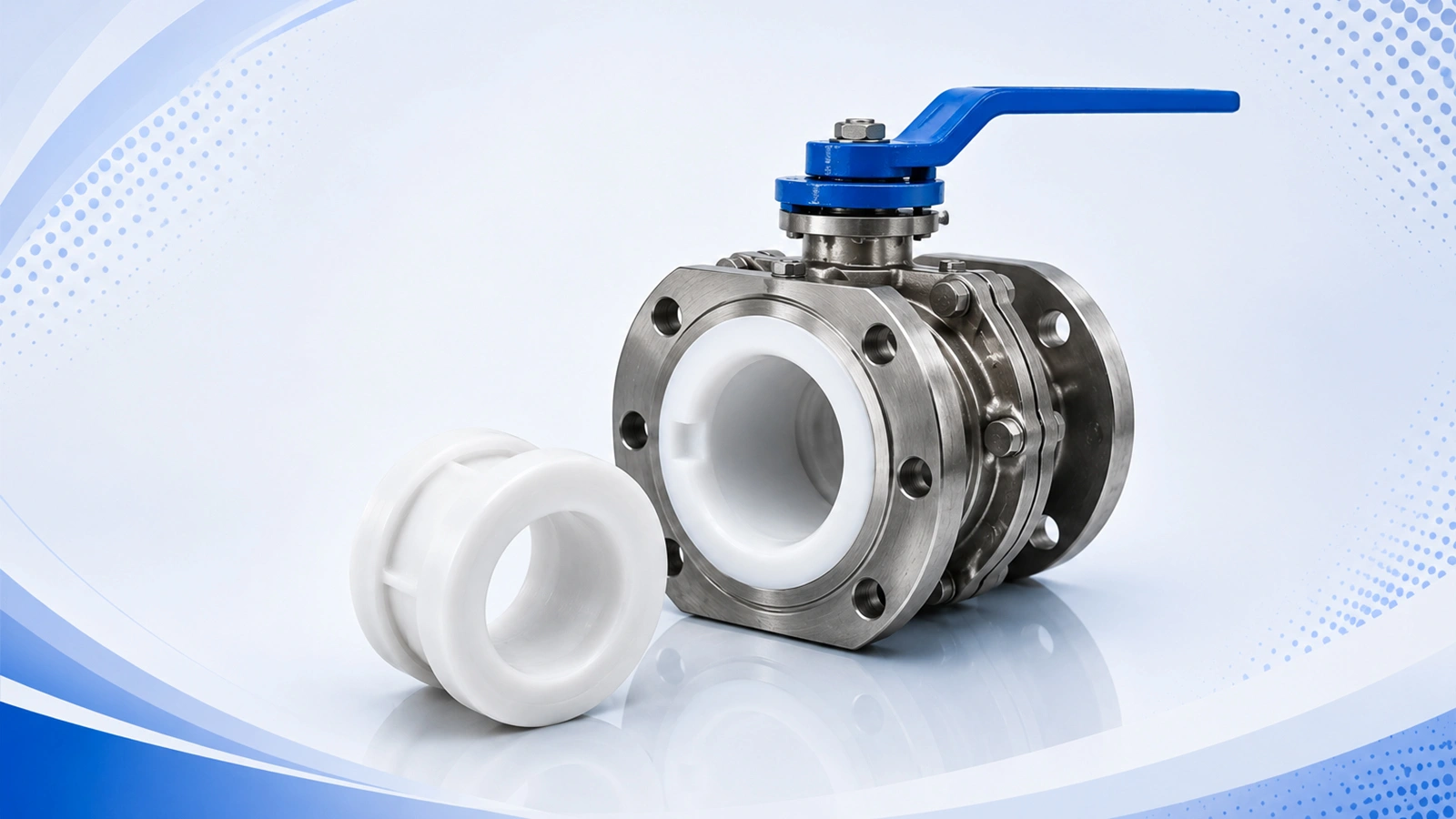
A PTFE plug valve is a kind of quarter-turn valve with a solid cylindrical or conically tapered plug that rotates within the valve body to control flow, and features a PTFE sleeve or lining that acts as a bearing between the plug and the valve body, offering easy operation and tight sealing. The valve is turned 90° internally by the plug around its axis to open or close the flow path of liquids or gases.
To reduce friction, leakage, and external lubrication, there is a PTFE sheet compensation on both sides of the FEP sheet. Due to their ability to resist almost all chemicals, PTFE plug valves are found in the processing of corrosive fluids, acids, solvents, and other chemical media. The valves are generally built in compliance with industry standards like API 599 and ASME B16.34, which assure safety, reliability, and high quality in high-pressure and temperature services.
Common Types of Plug Valves:
- Lubricated Plug Valve: A plug valve with a layer of lubricant between the body and the plug to reduce friction and make the operation smooth.
- Non-Lubricated Plug Valve: Constructed with sleeves/liners to remove the need for lubrication.
- Full Port PTFE Plug Valves: A full port design allows for flow without restriction through the valve, resulting in pressure drop reduction and flow efficiency improvement.
- Reduced Port PTFE Plug Valve: The flow opening of a reduced port valve is smaller than the size of the pipeline. Such valves are usually smaller and more cost-effective for medium flow applications.
- Multi-Port PTFE Plug Valve: Multi-port plug valves have several flow passages inside, through which flow diversion, mixing, or directional control of flow can be done in a single valve body.
What is a Metal Sleeve in a Plug Valve?
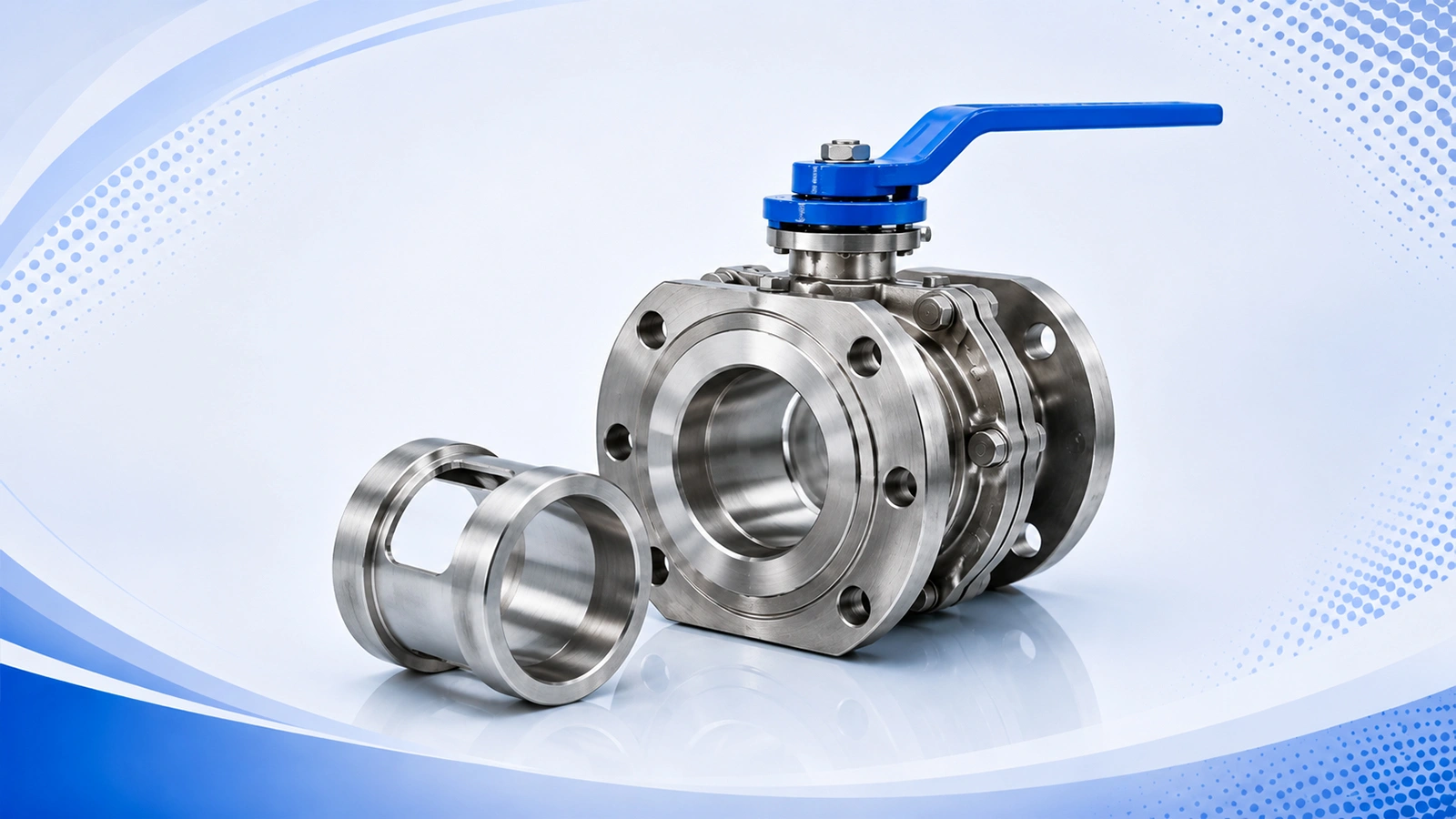
A metal sleeve is a high-precision internal part of a plug valve and provides a long-lasting sealing surface between the rotating plug and the valve body. Metal sleeves are not comparable to soft sleeves, which are made of PTFE or other polymers in terms of the material, but are made out of robust metallic materials such as SS, Alloy steel, Bronze, Duplex steel, or Inconel.
The metal sleeve is designed to tolerate high pressure, high temperature, abrasive media, and harsh working environments, while achieving a stable sealing performance. Such sleeves are often applied in heavy-duty industrial applications where soft-seated valves would become compromised due to wear, thermal expansion, or exposure to chemicals.
Key Features of Metal Sleeves:
- High-temperature and pressure tolerance
- Good mechanical strength
- Good wear and corrosion resistance
- For steam, slurry, and abrasive liquids
- Dependable performance in tough industrial environments
- Extended service life in demanding applications
PTFE Sleeve vs Metal Sleeve: Key Performance Comparison
Application-Based Comparison: Which Sleeve Works Best Where?
The choice of a PTFE sleeve or a metal sleeve is determined by the operating conditions, such as temperature, pressure, and the nature of the conveying medium. Both sleeves are tailored to specific industrial applications, and choosing the appropriate sleeve for your valve can increase valve performance, safety, and service life.
Conclusion: Making the Right Choice for Long-Term Performance
Deciding on PTFE or metal plug valve sleeves boils down to one simple fact: within the whole linings are “better” but punchy, only the one that suits your application best. PTFE sleeves are well known for their excellent corrosion resistance, smooth running, and low maintenance, which makes them perfect for use in the chemical, pharmaceutical, and hygiene-sensitive sectors.
For dependable and high-quality PTFE solutions, Goa Polymer is the name you can rely on in the Industry. With our ISO certified manufacturing facilities, state-of-the-art testing ability, and commitment towards quality and innovation, the company offers robust PTFE Products- including plug valve sleeves that are engineered to fulfill the demands of challenging industrial applications.